
Government [and AI-powered businesses] can't work without trust.
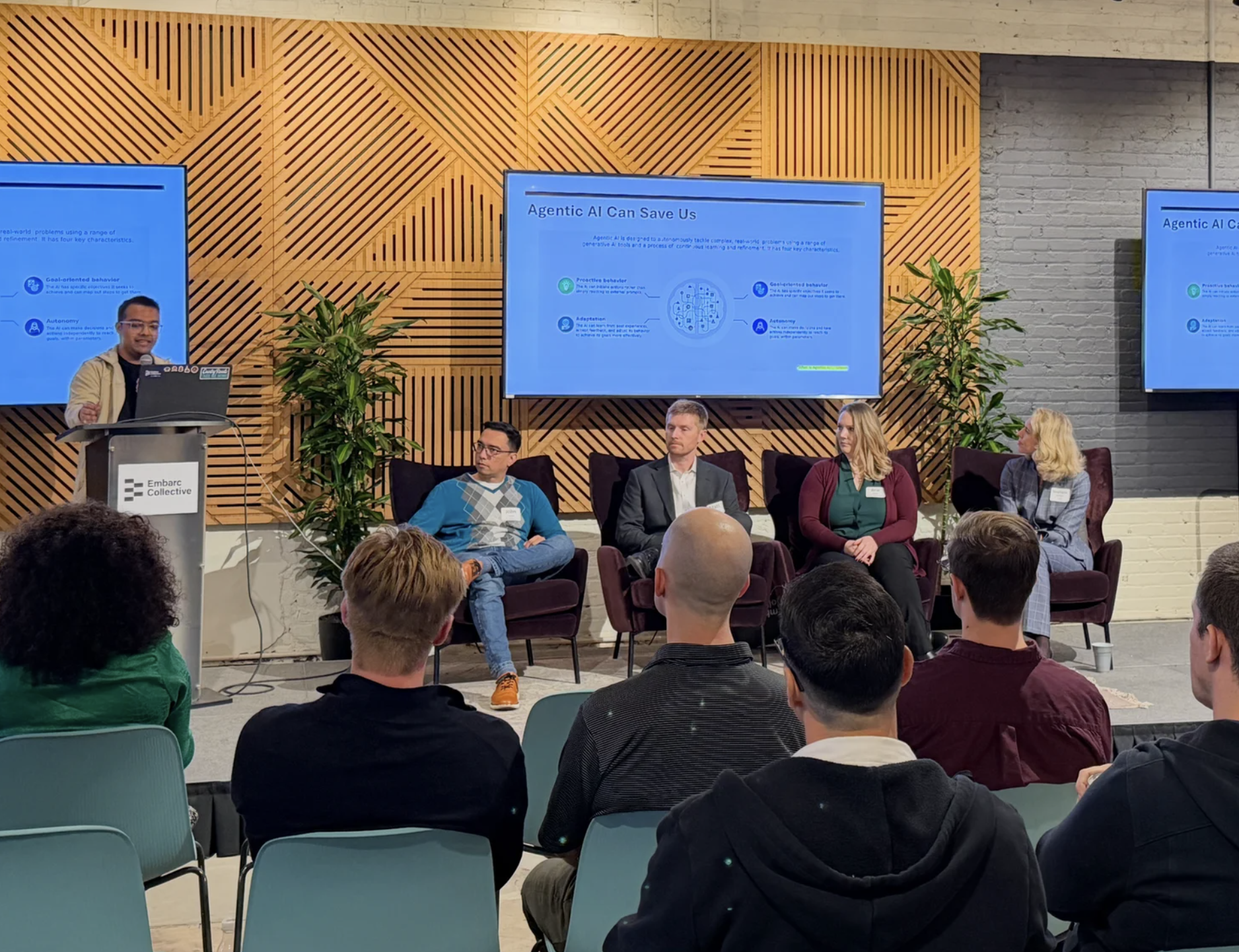
One of the strongest themes to emerge from our recent Working With Government Procurement in an AI Age event was not about speed, efficiency, or cost savings.
It was about trust.
This topic came up multiple times among the panelists, and for good reason: AI adoption fails when organizations move faster than trust allows.
In government and highly regulated environments, public trust is not a nice-to-have. It is the system constraint. But public trust is just as critical for any businesses using AI. Any system that asks people to share sensitive information, rely on automated analysis, or base decisions on AI output lives or dies on whether it is trusted.
A few principles stood out clearly from the discussion:
Trust becomes the limiting factor for AI adoption, not necessarily technology. Government and public institutions only function when people believe decisions are fair, explainable, and accountable. Even highly capable AI systems stall when stakeholders do not understand how decisions are made or who is responsible for them.
Human oversight has to be designed in from the beginning. Trust erodes quickly when people cannot tell where human judgment begins and ends. AI that operates without visible accountability creates discomfort, especially when decisions involve money, rights, or public access.
Transparency matters more than sophistication. Organizations earn trust by being clear about where AI is used, where it is not used, and why. Ambiguity around AI usage often raises more concern than the technology itself.
Control builds trust better than automation. People are more comfortable with AI when they know how to turn it on, turn it off, and limit its scope. Systems that remove agency tend to trigger resistance, even if they perform well.
Public entities don't get the luxury of failing fast. In the private sector, mistakes can often be corrected quietly. In the public sector, a single ethical failure can undermine public confidence and careers. That reality fundamentally changes how AI must be introduced and governed.
AI should elevate judgment, not replace it. The strongest consensus from the event was that AI works best when it reduces low-value cognitive load and supports better human decisions, not when it removes people from the loop entirely. This has been a foundational idea of SquarePact from the beginning, one that I have been advocating for decades in my academic work.
Finally, trust runs both directions. Vendors earn credibility by acting as partners rather than just sellers. Calling out risks, limitations, or ethical concerns early strengthens relationships instead of weakening them. Governments, in turn, need tools they can understand, control, and explain.
Taken together, these insights point to a simple conclusion. Winning trust in an AI age is less about having the most advanced models and more about having clear boundaries, governance, and accountability.
This is also the lens through which we think about products like SquarePact. The goal is not to automate judgment away, but to support it by making work more transparent, reviewable, and reliable.
As AI becomes more embedded in procurement and public-sector work, trust will increasingly separate successful adoption from stalled initiatives.
We will continue sharing practical lessons from these conversations as more organizations navigate this shift.
Happy new year!
- Dr. Licato
